Showing posts with label context. Show all posts

Saturday, 2 December 2023

Statistically Selective


By: Jonathan Seidel


Redick and necessary context


While debates about the G.O.A.T have been frequent, recently debates concerning older players has been centerstage. Former NBA player JJ Redick argued that Larry Bird was not a top three point shooter based on stats. Yet his stats mar anyone before the past decade to be considered in the conversation.


Redick’s comment is genuine by his metrics: volume and percentage. Applying his logic, even greats such as Ray Allen and Reggie Miller would be omitted for their lack of qualification. Steve Kerr with the highest career percentage doesn't make the cut. Only the past half decade with the surge in three point shooting are acceptable. His metrics are fair but longevity and normality provide a lethal leverage that bemoans any pastime. The lack of volume and practice to perfect the shot is an unfair advantage that cannot be accepted across the board. Being a good shooter is the ability to make them not the inflated result from an obsessed era. 


Context is important. Redick leaves out so many details. Firstly, everyone is shooting threes. Even big man need to be able to do so efficiently to keep their spot. It is a right of passage that was non-existent a decade ago. Endless practice to perfect the shot is an advantage not afforded to past players. Even players like Wade and LeBron were disadvantaged as their slashing ability was quickly overhauled with three pointers. Ray Allen only transitioned later in his career to a spot up shooter. His excellence drew from his consistent practice. His priority was three pointers and he drilled them. This was not the focus fifteen years ago. 


In addition to three pointers priority which again watching players persistently shoot them pushes youngsters to do so as well. Entering the league with a youthful experience of three point practice. The three point barrage has spaced the court so much that scoring has become so much easier. This year there are multiple players averaging over thirty a game. The ease of spacing plus the sagging defence and defensive three seconds gives more leeway to score. Loosening the rules on travelling with the gather step and step back jumper allows a player more space and openness to score. Looking at the current euro league, though a step down from the NBA, no one scores over twenty points due to suffocating defences and limited court spacing. 


Three pointers were introduced in 1979. They were not a fundamental part of the game. Teams gradually introduced their use over the next decades. If the league plays the game a certain way with less threes, it does not make them a worse three point shooter for not attempting more. The ability to excel in a system plagued against your strengths is heavily better than faltering in a system pushed for an agenda. To put this in perspective James Harden was the three king in 2017 and 2018 shooting 265 and 378 threes on a meagre 36.7% shooting. Stephen Curry won his seventh on 38% shooting. For Larry Bird, both of his were over 40% despite shooting under a 100 threes. 


Penalising Bird because he shot less threes is unfair given that he was shooting them in a discouraging system. The idea that if he shot more he would miss more does not hold up. Given Curry’s highest volume and best statistical season with 402 makes out of 886 attempts on 45% shooting. Both could be true. Playing against the norm is not simple nor reassuring. Judging his ability by his career average belittles his true ability as his poor first seasons were at the onset of its use and less accustomed to its use. By the second half of his career he had won the three point contest three years in a row, had two straight 50/40/90 seasons, was the three point king twice and with the exception of the 1989 season shot over 40% for the rest of his career. 


Bird’s efficient shooting of 50% despite an abysmal 28.6% from three is quite telling of his introduction to the three pointer. The fact he led the league two years in a row with around eighty three pointers underscores its near irrelevance. His percentage was always way above league average towards the second half of his career. He played in six games in the 1988 season before a season ending injury and did not attempt a single three, something unprecedented today. Bird’s efficiency in an unfocused era is tremendous. Context is key to recognising excellence in a restricted era. He shot one three a game and did it well. If he could win those contests so smoothly who isn’t to say with a more charged league he wouldn’t have excelled. 


There is little doubt that today is the most talented of ball players. Growing up in competitive AAU leagues with contemporary medicine to enhance their capabilities. Yet this means that each player is placed horizontally to his competition. Bird’s excellence to his opponents correlates to Curry’s success. There are variables today that recognise incredible leaps in higher shooting percentage. Yet the less talented Bird against less talented competition cannot be ignored. Upholding Redick’s part time plumbers claim works both ways. Meaning that Cousy was a plumber too. That he was not so great. Yet given his limitations and excellence against his era, with modern standards would excel as well.


Comparing Bird to Curry is unfair under Redick's analysis. To give Redick is due, it is fair to claim that today's shooters are better than past timers. By virtue of more practice and centrality on the three point shot, they are better. While it is plausible that some past players could have been better three point shooters if they were given the chance whether that be Bird, Hodges or Price they didn't have that opportunity. Whether they could've been is not the same as being. Without statistics to prove otherwise it mere conjecture. That being said, if a player shot a low volume but did so efficiently then high volume may have also been compatible. The claim that he wasn't guarded because players weren't afraid of that kind of shot is disproven by game film. For Bird, condensing his entire career his shooting was poor but those were the first years of its introduction and his injury-riddled end. At his peak he was hitting efficiently.    


This idea that old players would fail in the modern era and vice versa is dubious. Would certain players fit better yes. Bird and Miller would be far more deadly today while LeBron and Wade would have had more success in the 90s. Still his overall success against his lacklustre talent and tormenting defences produced incredible results. Even someone like Shaq could prevail if need be just remember Orlando Shaq following a similar transformation of Giannis. The best against their era is sole method of delineation. Having the same limitations and capabilities. Throwing shade is one thing but discredit without context is unfair and deceptive.


What can be judged is the data that we have. Yet proper fair context must be incorporated. If a player's percentage rises tremendously over the years either he has improved and/or he focused more on that part of his game. Could MJ have been a good three point shooter maybe. He played point guard for the final quarter of a season and averaged a triple double. Numbers eclipsing LeBron's. Against Clyde and the Blazers he hit six threes. Wilt was a terrible free throw shooting but tried underhand for a little while and brought his percentage up infinitely but refused to continue out of embarrassment. Consecutive peaks are a better measure since especially in these examples they demonstrate a chosen direction that began bumpy and excelled in the long run. Yet for each whether it was injuries, coach change or shame they switched back to the old the ways. 


To be fair, was MJ a good point guard or Wilt a good free throw shooter is in the negative for the latter and uncertain for the former. MJ didn't spend enough time at the point guard there was a glimpse of Magic jr and proto-LeBron numbers. Wilt's unwillingness to continue his hot streak ended a positive shift in his percentage. Larry on the other hand did spend consecutive years excelling. Bird's percentage is better than Harden's overall. Looking at Bird's development, the more threes he shot the better his percentage. The only reason his percentage was bad was because he shooting under one a game. Consistent growth and stability is the correct marker.


There is a lot of "what if" possibilities and those are fun to watch analysts yell at one another for an entire hour. If three point shooting was pushed in the 80s maybe are past superstars would have more points and more accolades. Yet it is a problem to look on data monolithically. Did Bird shoot a low volume? Yes. Was three point shooting part of the game? No. Was the three pointer regulated when he was drafted? No. Therefore, it is only fair to consider he statistics as he actually shot threes when was actually committed to it. Looking at the data in this consecutive peak though with a low volume is quite good. Is Bird at the top of the list? No. Given the context he isn't that far down. Yearly statistics aren't everything. 

Sunday, 19 November 2023

Charitable Hesitation


By: Jonathan Seidel


Peter Singer, moral praise and ordinary evil: passivity as a curse to humanity (Jeffrey Kaplan)


Peter Singer makes a very interesting assumption. In his moral epiphany he reckons that we think in cost and benefit. Running into a pond to save a drowning child at the expense of one’s shoes is of little significance. It doesn’t matter whether there are bystanders or not. It is your obligation to assist. Yet there is a psychological aspect not of seeing the problem but of not doing anything. Passivity is the curse of humanity. 


Singer’s thesis is constructed into a syllogism. The syllogism begins with the assertion that if we can prevent tragedy without sacrificing much then it is morally obligatory to execute. Describing hunger, disease, disability among others in the category of tragic. Luxuries spent are morally insignificant. Donating money to relief agencies can prevent these very tragedies. Thus it is obligatory on us to donate the would be money on luxuries to these relic agencies to prevent these tragedies. Quite a sound argument. It does run into rebuttal. If there are other people around, does that make you more liable? Singer believes that everyone is their own moral agent and that the onus is on you. Though unlike religious morality which has supernal judgement, this is simply a mental conscious note. Unless you are the sole bearer who could’ve but didn’t, there is much to answer for beyond one’s own mental fatigue. Singer believes in an intuitive reaction to the issue. An ontological assault. It isn’t about the context insofar as the child can be saved and you can do it. If you cannot that is on you and you are failing the world. Harsh but seemingly necessary. 


A child drowning is a bit extreme. The possibility of people watching and not helping is not minute but seemingly discarded. There are cases of bystanders. It is usually the bystander effect that wishes others will get involved. Yet unlike burglaries, this is a child and you can heroically save him. Most people would seemingly do it. Even if it is a dangerous endeavour, compassion for children does go a long way. If this is the case then heroes will make their way into the pond to protect the child. Strangers or now children ought to be protected. For the rational mind, children are innocent and must be defended from life’s harms. While Singer’s questionnaire received full marks, his questions were theoretical. None of the participants were there, thus such context is necessary for further evaluation. Context not only allows the child’s circumstances but also the setting as well as the saviour. Does the potential saviour know how to swim? Does he hesitate not knowing how far he is? Does he buckle under pressure? More or less instinctive execution takes over and people jump in. The mind heads into overdrive and the child is cradled to safety by the anonymous saviour.


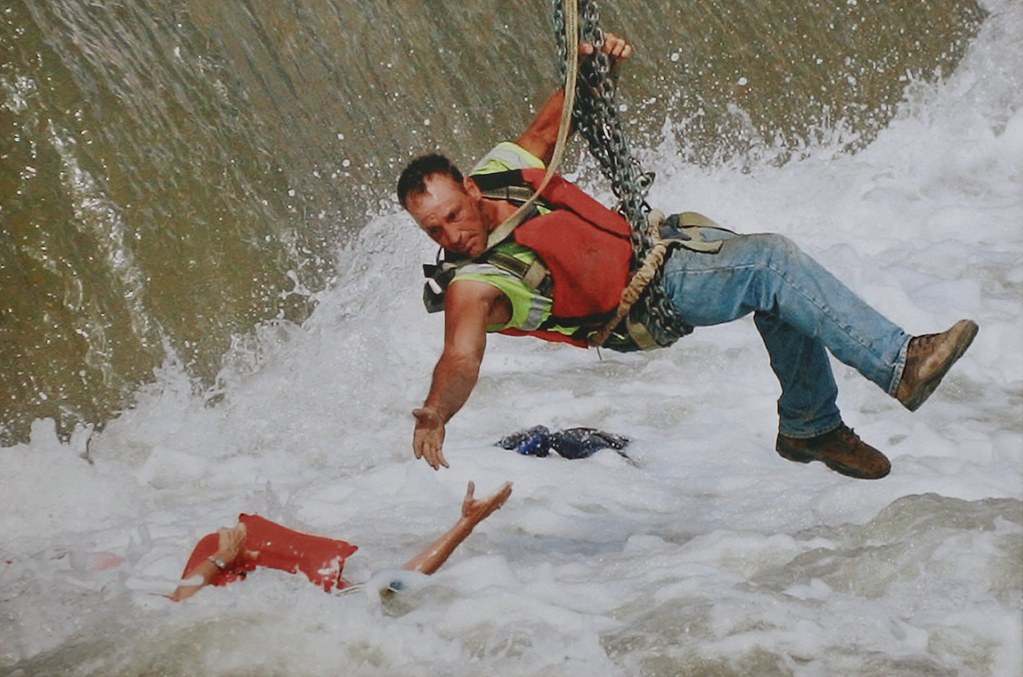
In the case of bystanders not doing anything, most people would snarl at them and do it themselves. Stuck in their tracks, a child’s safety warrants engagement. People will get up to save the child. There is always that one heavy tattooed muscular middle aged man that runs in to safe the child swept up by the ocean current. A fatherly love for his son he goes in to save someone else’s. After saving the child, he scorns everyone else for not helping. Some people have a more intact moral compass. Willing to go the extra mile for those they do not know. The is a moral agency nurtured to those who experience the feeble nature of a child. Those who have fathered children recognise the innocence and the easy demise of a beautiful soul. They rush in to provide that uncanny and unique experience to the parents. Just as they wish health upon their children so do they on others. They are selfish people but it seems instinctive to many bystanders to act upon it. A child in need of protection is a sound alarm to the animalistic core of human behaviour. Protect those children they are vital. 


It isn’t entirely clear why people would stand around while a child is drowning. Are they that heartless? There is a certain hope that others will take care of it. It usually is not out of cost-benefit but relying on others to save the day. The list of contextual elements in Singer’s questionnaire are interesting given the friends are trying to prevent saving a child. In such a scenario, most people would look at their friends funny and find new ones. Such immorality is not tolerated. Empathy stretches across the species. A special place for children protection. Child predators receive the worst of punishments in prison. At least one person is stepping up for the child whether he be drowning or dragging his feet in the street. To what extent people sacrifice is measured by the danger to the child. The drowning child is on the verge of death. If a woman was drowning spectators would make their way into the pond to save her. The same goes for another man. In certain societies expectations may be set that a drowning victim is not to be saved by order of the institutional legal system. Yet there is still always one who overrides the system for the betterment of ethics. 


Singer’s example is extreme and thus his conclusion while logically sound does not merit the same result. While he transitions from drowning to starving children continents away, what about the homeless in one’s own town. Singer’s point of seeing is inadequate to some extent since people ignore the homeless in their own town. Yes, there is an obvious ignorance to those abroad because they are far but those close by are also neglected. People see those starving and yet do nothing. Why? Bystander effect? To some degree yes but to another degree no. It is more the social perception of homeless. A child drowning grabs the attention. It is desirable to save a child. While the right thing to do, praise follows the heroic attempt. Hailed in the news networks for his obvious action. When the hero tells reporters it was nothing or of course he is not being humble but stating the obvious. On the hand if he left the child to die he would be ridiculed. Judgement of this act intoxicates a level of adherence to ensuring the survival of a child. It is not cost-benefit but capability in the face of social reaction. 


A homeless child may receive empathy but not a shelter to protect him. A vendor may take pity on the boy and provide him a free meal but potentially periodic. The danger is not perceived in the same light nor is the social obligation. It is not on the individual to open their homes to a straggler. Either it is the government’s or fate. It is not a bystander effect in the classical sense. It is not necessarily that another will pick up the slack but that it is too much to bear. There are so many questions. Giving a free meal is a start but then again that doesn’t solve the whole problem. People know about the problem but do not know where to start. Do not see their efforts going anywhere. The child is powerless to the world. In the sea, his life is spared and the problem solved but on the streets, salvation is stability. Hoards of cash must be allocated to supplying him the basic needs. Shelters exist and yet are underfunded and under concerned. If the representative force cannot do its job how does it expect the average person to do so. The citizen relies on the state. Pity does enable a few periodic assistive steps even to the extent of adoption but that is scarce given the obligations. 


Relief responses to natural disasters are executed infamously by church groups. These ethically charged organisations see it their duty to help their fellow citizens. Losing a house is one thing but a whole community deserves more aid. The group is coming for the entire affected. The magnitude of the disaster raises alarm bells. Leading to mass infliction of aid. Yet while they run to assist brethren abroad their own neighbours suffer to pay rent. The level of danger battles the necessity of assisting. All the aid going to Ukraine is pushed against the homeless problem. So much money that could’ve saved millions of lives went to random people abroad. Their situation is apparently more dire. Russia is attacking them. They are more important than stragglers on the street. More important than protecting fellow citizens. Generally the latter argument is void but even when brought up is ignored for assisting those with zero connection. It has little to do with connection and more to do with the media frenzy and narratives sown into the logic of human existence. Who is worse off. Obviously Ukrainians. They are fighting Russia. The homeless did it to themselves. This is America. Dubious caricatures of citizenry life demise is shortly acknowledged in the face of the big bad wolf. How can the lazy bums compare to the freedom fighters.


Kitty Genovese is the most famous bystander effect case. Her attack horrid and death tragic. The conclusion people thought someone else would stick up for her. Yet it also plausible they fear for their own lives. If they stepped up they could be hurt or attacked. Helping the innocent in danger does not preclude the danger on the self. If the child was drowning surrounded by sharks would people still jump in? Maybe or search for an alternative. It is a combination of elements. Children do receive more empathy and risk would be experimented to assist the child than a random case. If Kitty was a child more people may have stepped up or not. It depends on the situation as well as the people. The psyche presents the situation differently by case. Nothing is built in a vacuum. Yet the sight has little to do in this case. It is a representation of magnitude and social perception to the self. It is not black and white. Variables alter the picture to a more greyish imperfection. Kitty’s death while deplorable may have more to do with the consequences of one’s actions than the hope that another would take care for it. Had she’d been attacked in the middle of Manhattan with many passersby, others may have lent a hand. Others were waiting for the authorities to do their job. Proximity despite danger may have empowered empathy. The case holds up somewhat but other aspects do explain the tragedy.


Social conditioning and generational biological beliefs coordinate to a certain perception of people. Whether that be due to situation distance or individual. The rationale to assist is quite mute in most situations. The blame game or even shedding the problem to a higher institution undermines the drive to aid. To take the seemingly worse example. A California musician built one room houses for the homeless. Paid and provided by his own bank account. A true gentleman. Then the government came and tore them down. An offence this was to them for doing the government’s job. Yet the government has yet to provide any housing to these people. The only single hope was tarnished by elected fools who arrogantly claim to solve it but in the end do very little. A stigma of elitist narcissism as well as citizen expectation. Even when people help, the government looks down upon them. How dare you assist those in need. The media defends the elites and then the public is disinterested in helping. The cost to themselves overrides the benefit to others. It isn’t simply that people are evil but the government’s promise is rarely fulfilled. When executed knowing their incompetence, the government retaliates. It is a lose-lose. All those tax-paying dollars apparently goes nowhere. The government’s protection is voided for the homeless, usually those people who they themselves screwed over. 


Assistive logic is sound but there are many deterrents, many a time political maniacs. There was a case of a wealthy philanthropist who desired to build a huge park but politicians rejected his claim and gave it to an elite mogul who the council owed a favour to. Even benefactors are strayed due to elite corruption. A vicious cycle. Policemen failed to save a drowning child because they were not trained, if they had dove in disciplinary action was imminent. Stupid rules and dubious debts further undermine the charitable capability. How many of the non-profit organisations promising to assist those in need actually hold up their end of the bargain. BLM was a huge movement with aspiring heights to assist the black community. Barely a dime went to those causes and instead went to greedy pockets of the activists. Blocks and walls hesitate charitable empaths from assisting. Giving a child a free meal will cost business hurting his ability to meet month’s rent. Taking in a child without proper adoption protocol can be exceedingly legally viable despite the agency’s corruption and endless loop. It is not easy to be charitable when corruption is so prevalent. When there are so many institutional loops preventing charitable agency. So why bother when the cost is too great. Singer is correct logically but he is living in anarchy or in the past. Society has regulated so much that doing anything nice can be illegal. This is not even a joke. It is terrible with no sight for reconciliation in any degree.


If anything, this conditions people to not help at all. Thus in cases where there is legality to assist people aren’t prone to help. Combined with the inherent stigmas about homelessness and it is evermore unlikely people will assist. Beyond institutional grounds, people do help but through organisations. Nobody knows if beggars are truly genuine or are they playing a part. That poor woman sits there everyday so many people help her she is must be scamming, that man has an iPhone he is scamming people. Eyewitness testimony derails giving without an investigation. Deciding not to inspite of their guilt. The people sceptical prefer to give to organisations. Yet not all these organisations are adequate or genuine like BLM. Most find them trustworthy or only give to certain ones they know are legitimate. There are still many lost, those who do not get help. Good organisations cannot cover everyone and with the government fighting more than executing productive action the homeless rot. There is also a fear of the homeless more than just a scepticism. They harass in desperation but it comes off as annoying and aggravating. People do not like to give to those who insult them. Yet these people are just hungry and empathy is overshadowed when insults are hurled. People do not feel bad because the cost of the insult is too great.


Yesterday, on the train, a poor man bequeathed everyone politely if passengers could spare him a total of 40 bucks. A large sum but the poor man explicitly stated that he was not coercing, wishing from those who were willing and was asking a little bit from everyone not a lump sum from a single individual. Interestingly, his mellow attitude garnered a pleasant response. Those unwilling or without cash did not give and he did not pry. People gave what they could and a girl even ran after him to supply a few coins. He smiled with gratitude from all those who assisted. A teary story indeed and one that conversed correctly procured himself the adequate amount. Most people are savages. So desperate that they beg impolitely. It isn’t a scare tactic nor to put you down. It is simply their fear taking the driver’s seat. If executed correctly the response will be affirming but emotions run high in desperate times. The poor man on the train’s perception was quite positive. Also, requesting from people after the holidays, it was pretty evident, passengers wanted to start the new year on a good note. Tone and appearance play a role in conjuring the recipient’s response. If you are hounded by the same beggar twice in a few days, it may undermine future attempts to give. Yet while you remember the beggar, he either remembers you giving and believes you to be a good man or he has no idea who you are and is just making his rounds in hope to satiate himself. Either way he is not trying to assault you but attempting to keep himself sane and healthy. 


Coming full circle, the case of a drowning child would save multiple times. The child may be seen as klutz but his impending death impassions spectators to assist him. The variables of the situation and the magnitude of danger is relevant. Then again hunger is impending death as well. Yet people see beggars as those who would go spend their money on drugs, so why give. It is just a waste. A stereotype though sometimes true is fleeing the disaster and mental deterioration of homelessness for some temporary joy. The perception of drugs is inherently negative and with no empathy for why the drugs or even their impact, the semantic speculation is not worthwhile to give. He is doing this to himself so why assist him in his death. This is also a stereotype not true of all or even most beggars. Social conditioning has an enormous impact on response to near tragedies. What is considered a tragedy and when does one intervene. These principles are codified in the psyche of the collective conscious. There are certain norms. People are praised for saving a drowning child and judged for letting him die. The same is not afforded for giving or not giving charity. This has little to do with foreign or domestic and more to do with stigma and norm. Singer’s logic is sound but his logic removes context undermining his entire utopian aspiration. 

Monday, 23 October 2023

Just Enjoy The Game


By: Jonathan Seidel


Statistics positional thinking and mistranslation


Sports statistics are a perfect example of misconstrued evaluation. At face value it seems the most simple way of evaluation. Whoever has the best numbers must be the best player. Yet little context is provided. A semantic reading of persistent quantity says little about the complexity of the scenario.


For starters, there are numerous narratives that complicate the situation. Whether it be the era, the opponents’ ability, game pace or rules. Cross-generational players have reoccurring debates. Analysts enjoying the intense jargon hurled in support of one player over another. Since they never played against one another it is a bunch of bogus sprung on one another. The hypothetical is narcissistically animated in dramatic hollowness. There is no way of knowing. Conjuring potential outcomes is guesswork with probabilities as our best bet.  Dreaming of these profound matchups that can never happen. It is the starstruck analyst debacles that raise a genuine humorous response from the audience. Yet its continuous controversy only fuels tedious self affirming pride. The greatest conversation is an opinionated fortune that needlessly garners overemphasis. 


Numbers are the clearest metric to measure a player. This is not solely a sports phenomenon. The model to grasp a student’s knowledge is to test him. Formulating an exam of knowledge bits throughout the semester, long lecturing will be examined in a spit back format. Yet nuanced as the questions do not mirror the class format. Bullet pointed in equivalent application to recall and spill it on a piece of paper. Evaluating a student’s progress and internalisation is in their memorial capability and fluid application. A number that decides their fate and future. All in the hands of a hopefully generous educator. In sports, progress is similarly likened. A player’s excellence is projected by their ability to rack up stats. A player with little quantity is deemed a bad player. Minute accolades is a display of inferior play. 


A difficulty in equating cross-generational players is also with students. Not all are created equal. Different eras brings more competition, better teachers and more information. Different styles affect the outcome. The internet provides easier access but also more data to consume. Never beforehand classes are taught on coding and cybersecurity. Technology is a double-edged sword. There are pros and cons for the student as well as for the athlete. Better medical supplies but more athletic players. In this regard, numbers are inflated today due in part to the medical advances and athletic abilities. More competition and support in their youth. Players are prolonging their careers and maintaining excellence past their prime. Yet these are not the sole reasons for stat inflation. They are but a consequence of technological advancement. A parcel of the larger equation. These two factors alone are more advantageous to the current player than ever possible for a past player. 


While I am not aware of soccer evolution. Humanity did not evolve to withstand better conditions biologically in the past ten years but instead created technology that aids in achieving that threshold. Meaning it wasn't that players became bigger evolutionarily but new advances demonstrated the ability to cultivate bigger bodies. Bigger frames and faster strides are routine training regimens. A novelty unheard of decades ago. Skill is definitely important but athletic ability remains a talent scoring high marks. Better training will produce better results for the committed bunch. This advantage holds true as a stronger faster individual will be able to reach elite status quicker and more efficiently than the inept individual years ago. Though skilled, his faltering health sours his longevity but even seasonal ability is marred by inability to consistently show up if his training is not of the current model. While he may maintain greatness temporarily in the long run his body will begin to crumble. The pressure will overwhelm his bodily capability.


Talented individuals even if they do not possess the contemporary technological training should bulldoze their opponents. The current advances are open for everyone. While there are more athletic individuals today, that is a group in constant competition. A fair fight against one’s era. Success against opponents under the same conditions is fair. If both are running on their respective criteria then while total numbers may be at a loss, yearly will not necessarily. This a good start to recognising the limitations placed in various ages but it fails to accommodate the additional factors to the overall equation. The three point shot was not a priority until recently and has taken the game by storm. The number of possessions has skyrocketed and defence lacking. Rule changes and game pace are often unnoticed postulates. They make a big difference. While the amount of high scorers may be a landslide to past decades the high game scores also make up for it. At the end of day this must be scrutinised to its full data. Thirty points today may have been twenty ten years ago. 


Todays NBA is nicknamed position-less basketball and yet positional thinking still remains. While most teams are looking for a big man who can shoot threes and agile enough to keep up with smaller players it does not change the intuitive positional thinking that still remains. The assist leaders are point guards and rebounding leaders are centers. It less the number and more the way one plays. James is a facilitator. While he scores many points he dishes many of his passes. Not to say he is pass first but he looks to move the offence. Bryant and Jordan had stretches playing point guard where they put up astonishing numbers. Bryant had multiple double-double assist numbs and Jordan put up thirty point triple-doubles in ten of eleven games. They both put up incredible stat lines. With the ball in one’s hand for that much time making the decisions, they will put up those numbers and honestly still may not win. Stats does not equal success. How one plays determines their splash of numbers. 


Advanced statistics attempt to get beyond the simple categories marred by many of the inadequacies mentioned. Two classic advanced metrics are assist to turnover ratio and PER. The first is that turnovers is any loss of the ball. A player who handles the ball consistently is prone to more turnovers. A player frequently slashing to the rim to create openings for his teammates is pressuring his turnover rise while a player who throws the ball to his post player sits back. PER is identified as the king of statistics and yet obviously flawed. There is no accounting for the difference in player style. A player who creates his own shot versus a catch and shoot individual. The ability to stifle defences with stylish skills to manoeuvre around collapsing the staggering adversary for an open teammate is unrecorded. The effectiveness is ignored in the metric. The advanced categories attempt to make up behind the scenes but riddled with framing narration. The inconclusive affiliation undervalues defence and overvalues scoring based on the data scientist.  


Box scores cannot numerically measure the influence a player has on the court. A prominent player double teamed enables open opportunities for teammates without ever adding a number to the box score. He may not even touch the ball and still deal decisive damage. The basketball term for this type of ability is called off-ball movement. While a shooter will juke his defender to make space for an open jumper a big man will post up his defender creating space to receive the ball down low for a layup. Both of these scenarios are looking to catch the ball and score, stats that will come up on the box score. Yet it is the scrappy run around that is even more effective. A player watched extensively draws defensive focus. As he twirls around the court the defence scared of his skill will continue to monitor him, gradually losing sight of other players. More concentration is deployed to keep up with the increased mobility of the single target losing other players to oblivion. Sharp cuts, screens and other breathtaking swift movements force defensive reaction deceptively keeping the prospected player in view by abandoning his teammate. Such artistry easily goes unnoticed without the numerical achievement but is not lost to the viewer.   


Stooped in numbers also misses the entire point. Recognising greatness but numbers devalues the game routine. Watching a college basketball game answers this inquiry. The players, though inferior to their professional counterparts, have stats spread around the board. The game is orchestrated by team offence. It is not a one man offence with minimal players accumulating stats. The game is fluid and organic. The norms are embedded and while advances have been made there is still a traditional method playing according to structural hierarchies. It is till positional basketball. Yet beyond this professionally archaic model, it denotes a valuational goal. The hope is not statistical inflation but winning. School pride and success. Older players who do not possess the same statistical quantity may not have been chasing it just as certain categories were not tracked until later on. Take an example of a player driving in passing to a teammate who passes to a further teammate. The driver does not receive any stat. Point being the necessity of gathering numbers is almost insufficient. One person running the show or facilitating the offence was either inefficient or unacceptable. 


Cross-generational variance is an extensive equation but it also eclipses the methodological procedure. If the entire model is valued differently, then the product will have a different result. The measure of a good player depends on the frame he is situated in. Playing under certain criteria may enhance one’s stats or may wallow them. In both cases he may assist in the team’s victory without touching the ball most of the game. The current discussion is caught up in the factual data. This is something to revere and internalise but is not the end all and be all of a player’s influence nor talent. The best way is to watch them play. While it may not be easy to attain film on older figures, enough change has occurred in the past decades to watch an 80s match up between Magic and Bird to evaluate with Kobe and LeBron. Watching their play styles and excellence in their language games is the best model. The illustration, the full body examination over the bullet pointed postulates is the totality of their game.  

Spirited Away

  By: Jonathan Seidel Beer street: super touristy—overpriced food, grace alcohol deals, loud music, colored lights, circus fire breathing an...